Edições Anteriores
-

NOVA Tax Research Series - Volume Three
Vol. 3 (2025)Welcome Volume Three of the NOVA Tax Research Series. This volume continues our commitment to exploring taxation not only as a legal and financial mechanism, but as a dynamic tool capable of reflecting and shaping societal values and public policies.
Held on 9 and 10 October 2024 at NOVA School of Law and online, the III Annual Conference of NOVA Tax Research Lab addressed the critical question: Can tax legislation be less complex? The event brought together academics, practitioners, policymakers, and students to discuss tax law through multidisciplinary lenses – legal, economic, sociological, linguistic, and legislative – highlighting how deeply taxation intersects with broader societal challenges.
This volume includes sixteen chapters authored by researchers from various backgrounds and nationalities who have reflected on tax systems as they are (as the world is), imagined the future of tax governance (as the world is becoming) and proposed alternative objectives for tax policy (as the world could be).
As in previous volumes, the contributions are published in English and Portuguese, reflecting the linguistic and cultural diversity of our community. The following three sections structure this volume. Part I – Tax Goals features proposals for rethinking tax design, with a particular focus on transparency, public participation, simplification, and education. From regulatory sandboxes for biotech startups to civic engagement in tax legislation, this section invites readers to envisage new pathways for tax systems around the globe.
Part II – Tax Regimes offers a comparative view of existing tax structures, with attention to the complexities introduced by tax treaties, constitutional principles, and administrative opacity. The contributions highlight the need to clarify and demystify tax obligations, specifically in cross-border contexts.
Part III – Tax Transformations explores ongoing changes in the tax systems, including the incorporation of progressive principles into indirect taxes and the global negotiations of the UN Framework Convention on International Tax Cooperation. It also reflects on local dynamics, such as the current Brazilian tax reform and its implications for fiscal competition among states.
We are profoundly grateful to all the contributors, our editorial team, and the institutions that continue to support our work: NOVA School of Law, CEDIS, and the Foundation for Science and Technology (FCT). We also thank the conference participants, whose questions and insights significantly enriched the discussions that shape the basis of this publication.
May this book serve as a source of inspiration and a platform for continued dialogue about the future of taxation in an increasingly complex world.
Enjoy the read!
Rita Calçada Pires, Diogo Feio and Mariana Passos Beraldo
Editors, NOVA Tax Research Series – Volume Three
-
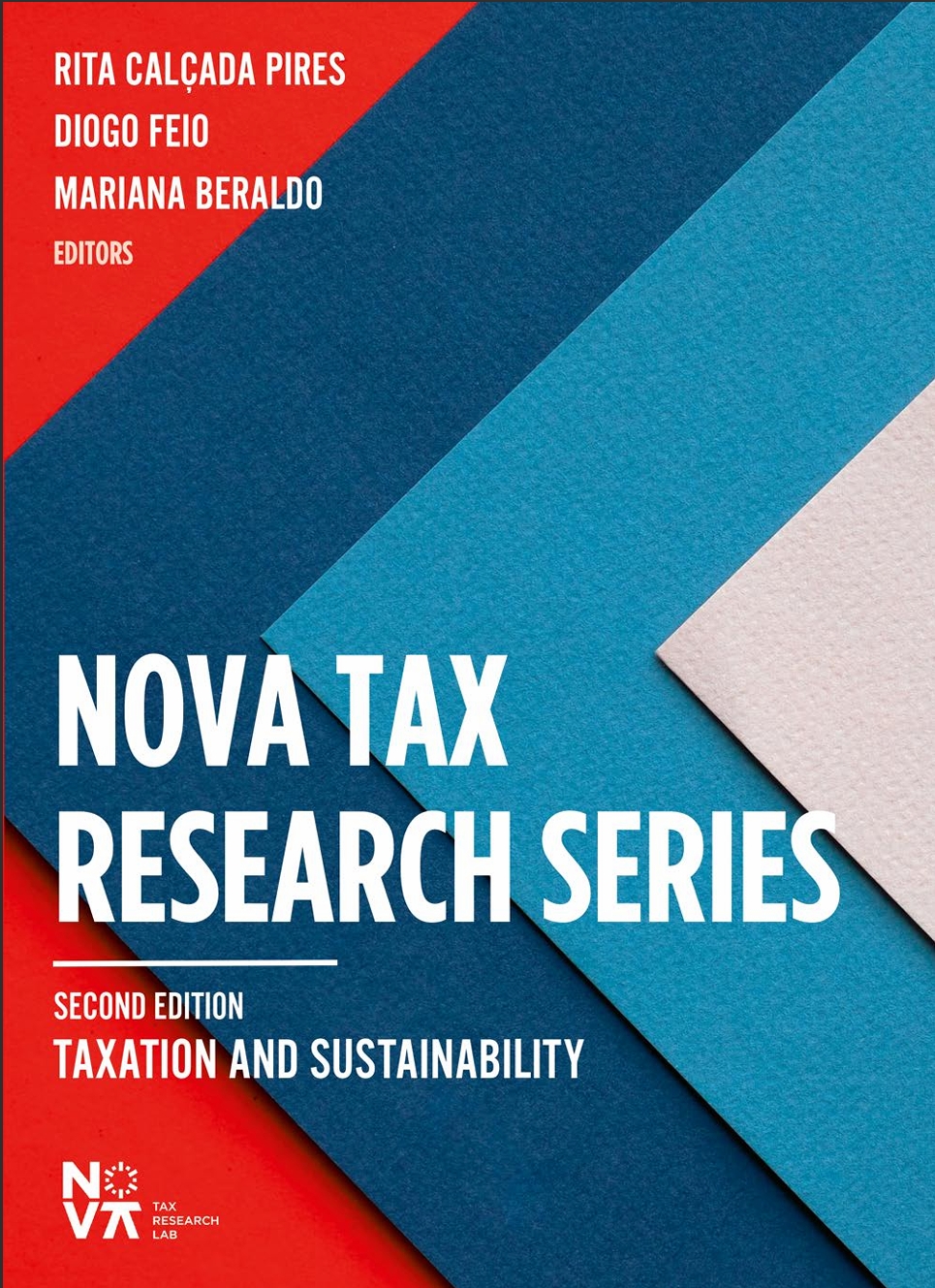
NOVA Tax Research Series - Taxation and Sustainability - Volume Two
Vol. 2 (2024)Editores: Rita Calçada Pires, Diogo Feio, Mariana BeraldoWelcome to the second edition of the NOVA Tax Research Series.
This edition, theme-based Taxation and Sustainability, reflects our continuous commitment to bringing the spotlight on the necessity to think, create, interpret, and apply a humanistic lens to taxation.
Integrating principles of sustainable development within our taxation research agenda and work demonstrates a path towards that humanization and reflects that our efforts are rooted in the profound belief that taxation is not merely a financial tool but a fundamental piece on the possibility to create global sustainable development.
-

NOVA Tax Research Series - Volume One
Vol. 1 (2023)The NOVA Tax Research Series is a digital publication entirely produced by the NOVA Tax Research Lab team. Divided into three thematic groups, the NOVA Tax Lab researchers delve into the state of the art of selected subjects. The first volume addresses TAX & HAPPINESS: How the world should and can be (Chaps. 1-4). This volume encompasses three significant parts with several interconnection points.
The first part focuses on Tax and Citizenship, particularly Tax Education. A global analysis reveals that tax education enhances tax morale, tax ethics, and citizenship by raising awareness of everyone's social responsibility in achieving common goals. Additionally, tax education impacts psychological and sociological aspects and provides taxpayers with knowledge about their duties and obligations. This approach aims to improve voluntary compliance and combat tax evasion and fraud. Furthermore, tax education should also help taxpayers acknowledge their rights (Chap. 1). The subsequent paper is dedicated to Tax & Collective Wellbeing. This work links public finances, tax management, tax communication, and sustainability. It underscores the equity and efficiency of the tax system, presenting taxes as tools for implementing the budgetary principles of stability and sustainability (Chap. 2). The first volume also explores the role of taxation in the Social Contract and the public governance of tax revenues for a sustainable welfare state (Chap. 3). The third topic discusses Tax & Sustainable Development Goals (SDGs), examining the connection between taxation and (i) the guarantee of human rights, (ii) the reduction of poverty, and (iii) gender equality. Moreover, it highlights taxation and the 4 R’s: Revenue, Redistribution, Repricing, and Representation. Finally, it explores the importance of paying a fair share for the fulfillment of Economic, Social, and Cultural Rights and the SDGs (Chap. 4).The second part examines TAX & GLOBAL GOVERNANCE: How the world is working (Chaps. 5-10). This volume focuses on the state of the art of research in Tax & Global Governance, particularly the relationship between states. It examines (i) decision-making in tax and international tax policy, (ii) the rationale behind the attribution of taxing rights between states, (iii) inter-state solidarity and tax justice, and (iv) the taxpayer as a global subject. The research delves into principles of international taxation, current standings, and identified trends. These principles are considered relevant, especially in light of the consequences of globalization and base erosion and profit shifting practices, with input from the responsible team (Chap. 5). Secondly, it is essential to understand the dynamics of decision-making at the international level, analyze the trend of tax multilateralism, and assess representation and participation in decision-making forums (Chap. 6). These initial topics form traditional and significant building blocks of the research team. The final subject matter, Pillar Two, is the most developed, allowing for a thorough technical analysis, limited to specific issues defined by the research team (Chap. 7). This volume also covers current topics and trends in taxation. It studies the impact of taxation on international remote work (Chap. 8), exit taxes considering citizenship taxation (Chap. 9), and the rise of space taxation (Chap. 10).
The third part discusses TAX, TECH & DIGITAL ECONOMY, SOCIETY AND PERSONALITY: How the world is and is still progressively and rapidly evolving (Chap. 11). This chapter addresses the necessity of taxation in the digital economy to ensure fairness and tax equality. It explores key features of the digital economy, from intangible assets to new business models lacking physical presence, and concludes with international approaches to address tax challenges arising from the digital economy.
The NOVA Tax Research Series' first edition includes 11 articles written from an interdisciplinary perspective and produced through collaborative investigation, providing in-depth analysis of current issues in domestic and international tax law. We believe this series of chapters will contribute to a growing body of literature exploring contemporary tax policy challenges and global tax issues. The publication also presents practical contributions, potentially guiding the formation of tax policies that seek tax justice and aim at global tax governance. We wish readers a pleasant and informative reading experience, whether for professional, academic, or intellectual interests.